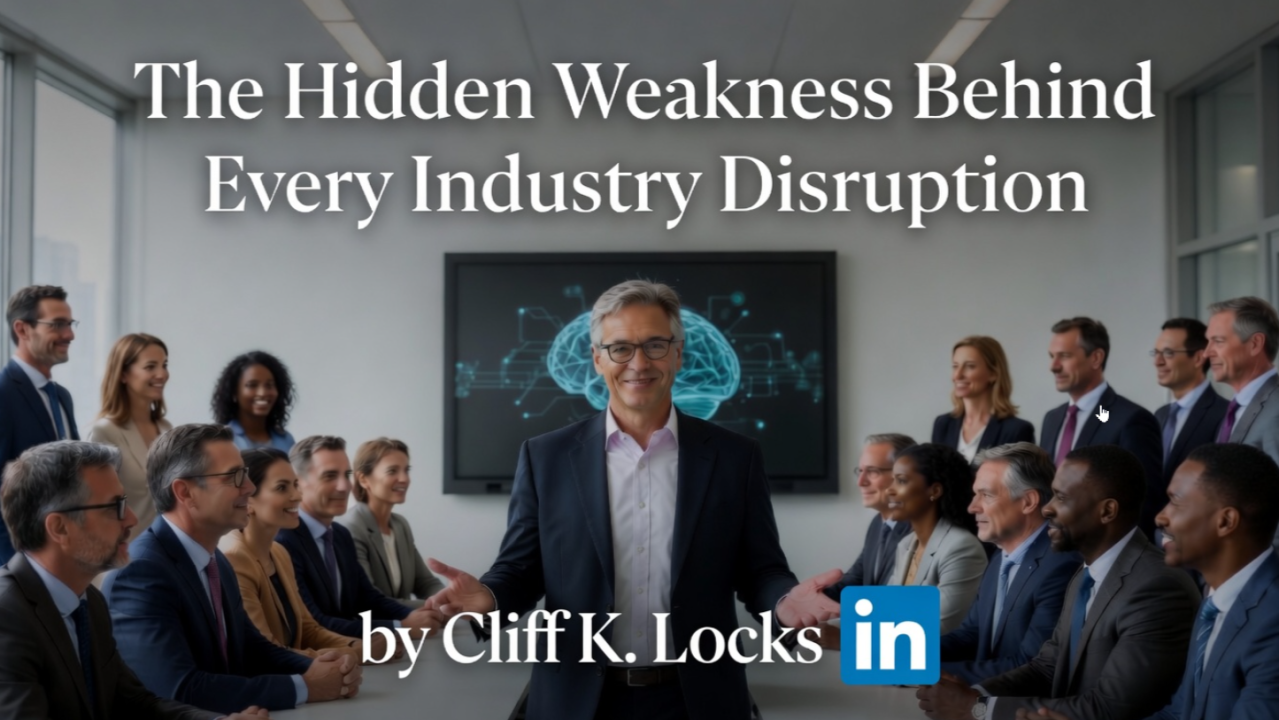
The Hidden Weakness Behind Every Industry Disruption
Evolving Governance in Family Enterprises: Strengthening Structure While Preserving Legacy
Many industries appear to be facing several separate crises at once, but in reality, the challenge is often rooted in a single structural weakness. What seems like multiple problems on the surface is often the result of a single outdated framework stretched beyond the conditions it was originally designed to support.
A supply shortage is not always about supply. More often, it reflects a dependency model that organizations have trusted for years without ever fully controlling. A technology breakdown is not simply a budget issue; it is often the consequence of legacy systems that performed well enough to avoid replacement until the day they could no longer keep pace with modern demands. A talent gap is not always about a lack of qualified people; it can also result from hiring processes that value cultural conformity over bold thinking and innovation.
These challenges may appear unrelated, but they often share the same foundation. Different symptoms, one underlying cause.
The organizations that thrive are the ones willing to question long-standing assumptions. In the same industry, one company may take proactive ownership of its risks, while another remains vulnerable because it assumes the environment will remain stable. The difference is not luck; it is foresight, adaptability, and the courage to act before disruption forces action.
History shows that systems rarely fail without warning. Signals of fragility are often visible years in advance. Yet many organizations continue to rely on structures that once worked exceptionally well, even when the world around them has changed. This is not a matter of ignorance or laziness. It is the natural tendency to preserve what has historically delivered results.
The lesson is clear: success in one era does not guarantee relevance in the next.
The people who built and maintained these systems were not wrong. In fact, they were often highly effective within the realities of their time. Their strategies created stability and progress. But leadership requires recognizing when proven models must evolve. Holding on too tightly to past formulas can limit future growth.
This is where true transformation begins.
When organizations align technology, talent, and operations as interconnected priorities, they create resilience rather than pressure. They build systems capable of adapting to changing markets, emerging opportunities, and unforeseen challenges. That alignment is not just an operational advantage; it becomes a strategic edge.
The most important question every leader should ask is this: What systems in your organization remain untouched, not because they are still effective, but because change feels uncomfortable?
Growth begins where comfort ends.
The future belongs to leaders who are willing to learn, rethink, and evolve. Every challenge is also an invitation to build stronger foundations. Every disruption carries the opportunity to redesign for greater success. Organizations that embrace this mindset will not only survive uncertainty but also lead through it.
The path forward is not about abandoning the past. It is about honoring what worked, while having the wisdom to create what works next.
Follow Cliff K. Locks on LinkedIn for strategic insights on leadership and a clear, forward-looking view of the future. Available for Board of Directors and Advisory roles, bringing strategic insight, operational experience, and leadership perspective. https://www.linkedin.com/in/clifflocks/
#LeadershipStrategy #BusinessTransformation #OperationalExcellence #FutureReady #ExecutiveLeadership #GrowthMindset
Cliff K. Locks, an accomplished mentor and executive coach with extensive experience in board leadership, corporate governance, and strategic guidance, is available for an additional board role as an independent, trusted board member. With a proven track record of supporting company growth and navigating complex challenges, Cliff brings valuable insights and dedicated bandwidth to contribute to a Board of Directors or Board of Advisors. His expertise makes him a vital asset for organizations seeking to enhance governance and make informed, forward-thinking decisions. Let’s talk; here is my calendar.
Contributor: Cliff K. Locks, CEO | COO | Executive Consultant and Mentor | Board of Directors | Governance | Private Equity Podcast Host | Reverse Logistics | Supply Chain | Advisory Board | SaaS | Clean Tech | Med Tech | Agentica AI Agents
comment off Click here to read/write comments